Behavioral Theories

I was not born to a wealthy family. When I was little, my parents could only provide us with what we need. I remember having a very rare privilege to leverage my negotiating skills to ask for things that I want when I see that other kids have them. I understood at a very young age that we need to strive hard in order for us to earn money and buy things we want.


Because of our financial situation, my parents rarely use material things as rewards to encourage good behavior. We were taught that good behavior pleases our God and will help us have a good relationship with other people. Our learning experiences for life were fostered by positive reinforcements by way of praises and developing the intrinsic desire to help others with the best that we can.

For me, these reinforcements I have experienced at home are positive and pleasant. However, as I grew up, I have also tried to experience some negative effects of behaviorist approaches. As a consistent top placer in elementary, I was used to being praised and showered with love by parents, relatives, teachers, and classmates whenever I get the highest rank. I was conditioned to strive for the first place, get high grades, and do my best in areas where I excelled. I got used to praises and admiration. However, when tasks seem to be unrewarding or too difficult where I knew I wouldn’t be the “best”, my motivation became low. I started to give up on difficult tasks. I have tried ending up failing to finish once the going gets rough. I lost the appreciation of the things I needed to do for their own sake. I associated my previous accomplishments to success, thinking that I am naturally intelligent and I don’t need to strive anymore.

It took time for me to remove this effect on me. Once I entered college, I was reminded how incompetent I was compared to all those brilliant minds. Everyone was smart and driven by their passion and ideologies. I felt left out. I realized that I am really not that good as what I think.

I realized that I should have valued hardwork and diligence more than praise. God-given talents should be improved and honed. I wish that my efforts and attitude were more valued rather than me fixating my intentions on outcomes which are not constant. Based on personal experience, a higher sense of purpose as a positive reinforcement is more compelling than superficial or material motivations. For me, desire, passion, grit, and purpose are more effective drivers for positive learning behaviors.

Peer and Self-Assessment

As a learner, I have had a lot of positive experiences with peer assessments. The validation that my group-mates have given me has encouraged me to take initiatives in future group projects or activities. I was encouraged to do better and do things beyond what was the minimum requirement. In turn, I have always tried to provide positive feedback to my group-mates and appreciate their contributions. I have also learned to accept and provide constructive criticisms to prevent discouragement.

Based on my experience, the sense of responsibility gets higher as a person matures and when the level of difficulty increases. When I was in elementary, group activities are opportunities to make friends and develop teamwork. Assigned tasks are not very difficult and instructions are more detailed. Designations were set by the educator and assessments were highly supervised. In most instances, feedback is written on fancy-shaped colored paper cut-outs, were compiled in scrapbooks, or recited in class. Negative remarks were minimal and constructive. During high school, group activities required a higher order of creativity, analysis, and accountability. My classmates are also more competitive. Supervision was minimal. Tasks were not specific so we enjoyed brainstorming of ideas. In college, absolute independence seemed to be impossible and peer studies are necessary for survival. Based on my experience, peer evaluations contributed more on our grades during elementary and high school. Peer assessments during college were more on the qualitative aspect.

Self-assessments were rarely facilitated by my teachers based on my experience. I can only remember essays of self-reflection or internalizations but these are one time instances and rarely consciously used by students for self-progress.

During college, I had to make conscious efforts to assess my learning. I was forced to be more independent and be mindful of my own learning in fear of having a failed grade. I made use of checklists, practice solutions, and planners to monitor my progress.

While enrolled in the PTC, I have appreciated blog entries and required milestones per week. Quizlets with maximum of three attempts also helped me to be conscious of key points that I needed to learn. Tick marks on moodle helped improve my learning experiences by ensuring that I comply with requirements which require engagement and replies to other students’ discussions. These mechanisms enabled me to enjoy learning and become more productive while monitoring my progress.

In my opinion, self and peer assessments should be carefully designed and facilitated to reap the intended results. While summative assessments are fundamental, peer and self-assessments should gear more towards formative assessments. The goals and criteria for assessments should be clearly stated. Some ways to do this is through checklists, milestones, guided questions, rubrics, and score systems. Students should also be trained to assess their peer and their own self. Constructive feedback should be encouraged and written tools be designed for monitoring their own progress.

As daunting the task may seem, these are all beneficial for both the educator and students in the long-run. For educators, the first step of formulating a good design may be hard, but once it has already been formulated, using it for future students could only get better and improved.
For students, self and peer assessments cultivates attitudes that could be very useful even after school. Learning to impart constructive criticisms, critical thinking, and a great sense of responsibility are life-long rewards. Hitting two birds in one stone, isn’t it?

Purpose of Assessment: Alignment

I have a poor sense of physical or spatial direction. That is the reason why I often rely on maps or instructions from residents when travelling to unfamiliar places. I sometimes find myself lost when when I could not align my understanding with the description of landmarks in the instructions given to me. Oftentimes, I misread the map when I could not successfully align where North is.

When we become unsuccessful in aligning North in a map, we risk losing our way or arriving in our destination later than expected. This could be likened to when our assessment is not aligned with the purpose and learning objectives.

I am already very familiar with summative assessments in the form of “assessments OF learning”. The feedback that this kind of assessment gives reminds me of laboratory results requested by the physician. It typically shows gained knowledge from the lessons. In the case of a blood chemistry, it shows red blood cells, white blood cells, plasma, and platelet counts. They show how much of the results compare to the prescribed normal value. As to grades, parents or students are often concerned with the passing grade or the performance in comparison with other students. These learning evaluations are important, but we have to go beyond what it warrants.

For a doctor to give a good diagnosis and prescribe good health practices and medicines for better health, they need to gather additional information or feedback from the patients. Educators would also want to gather evidences from assessments FOR learning. Like doctors, educators are concerned about the reason for arriving with the test results, what is the problem, how to address the root causes, and how to maintain or improve health. The next teaching instruction and planned experiences are based on the assessment. No solution comes before a diagnosis. I learned that educators need to adjust and readjust their next steps to suit the learning objectives based on proper measures.

Of course, learning is a two-way street. Students should view assessments AS learning. Educators could only help them as much as they help themselves. We should therefore strive to make them own their assessments by providing mechanisms for them to monitor their own learning. Diaries, checklists, and blogs such as this one would help the students actively monitor their progress based on learning objectives.

When we decide to choose assessment OF, FOR, or AS learning, we should strive to align these to the learning objectives for them to be meaningful.

Assessment Frameworks

When I hear the word “framework”, the words “structure”, “system”, “direction”, “pattern”, “foundation”, and “composition” come to mind. In order for physical structures [such as buildings] to maintain a strong integrity, a strong foundation, composition, and design should be considered by an engineer. For buildings, framework greatly influence their fate.
Even concepts such as assessment require a good framework. I have come to realize how a good framework for assessment should look like.

Cyclical Progression

But unlike buildings, assessment should follow a cyclical progression where adjustments in its components are desirable and needed for it to really work – to achieve the learning objectives. I have previously viewed grades as the final measure for assessment. But I know now that it is just one part of a larger story. Focusing too much on grades or scores limits our understanding on the extent of learning. Familiarizing ourselves with the components of assessment which involves processes and factors underlying each will establish our understanding of the framework.

Components are not completely separated and should be in harmony in achieving the desired learning objectives.

Student Learning Outcomes Statement

In my case, this was not a common practice before college. I have appreciated the importance of this during my undergrad because I was given an idea of the minimum KSAPs (knowledge, skill, ability, personal character) I needed to learn. Informing the learners of the educator’s expectations will also provide an opportunity for the students to correspond their performance with the assessment measures to be used.

Assessment Plans

It is important that assessment plans of individual educators be supported in the institutional level, not confined within the classroom. Seminars and trainings on assessments would be effective if they are actually applied in practice and when educators are given the freedom to implement them. Brainstorming and agreement on data collection tools and approaches would give the management an idea of the educators’ attainable responsibilities and amount of liberty.

Assessment Resources

Based on a cursory interview with a friend who is a Junior High School teacher, the concept of assessment has been continuously instilled in their system from their undergraduate, pre-service, to in-service trainings. Why do we need to continuously train and update ourselves on assessments? Because the needs of students and employment requirements or demands are ever changing. We must strive to be competitive, if not, be two steps ahead of our game.

Current Assessment Activities

Timetables are inevitable. Educators should be aware of the completed assesments of student learning and future activities.

Evidence of Student Learning

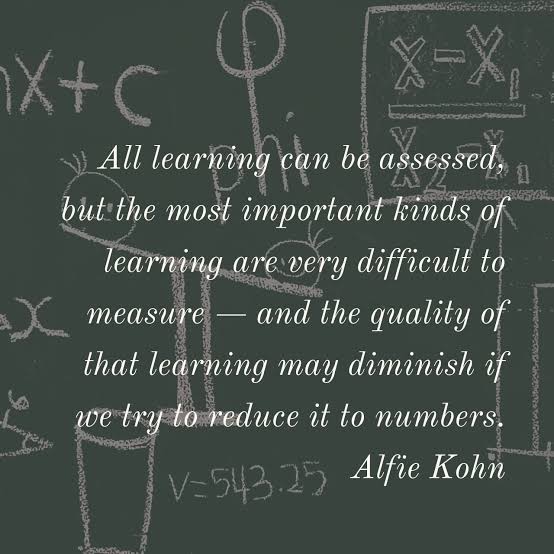
Objective and quantifiable measure of learning are more standardized and readily accepted universally. There is no problem in using these, but if we are limited, we may not see the entire extent of student learnings. While qualitative measures of evidence are time-consuming, we must never forget to make it as objective as possible through rubrics and systematic criteria.

Use of Student Learning Evidence

Evidences gathered are only as useful as how the educator could maximize their utility. Evidences are not just collected, but analyzed. It should be used to measure how much of the learning objectives have been attained and as inputs for improving course materials, learning experiences, and teaching methods. Results are categorized and evidences of higher order thinking questions or activities are given more gravity. Also, feedback coming from the learners themselves should be taken.

Intelligence

When I was younger and single, I made a list of qualities that I am looking for in a potential husband. The quality that made it to the top is “intelligence”. The reason is that I want to increase the probability that our child will also be intelligent. I thought, if my child would be intelligent, he or she would be successful in life.

I could not believe how I was so narrow-minded. From my youth, I was led to believe that intelligence determines a person’s value. Before, my concept of intelligence was measured by the g factor and academic grades. I focused on Thurstone’s (1938) seven (7) primary mental abilities: verbal comprehension, reasoning, perceptual speed, numerical ability, word fluency, associative memory, and spatial visualization.
I was proud of being always on top and developed a fixed mindset of intelligence. I thought that I would always be good in school and failed to exert effort on other things where I am not good at. I feared failure. I placed myself above other people and put less importance on improving my character.

As I grew in college, experience taught me that intelligence could be manifested in a lot of forms. Readings from Module 2 – “Intelligence” also provided me with a clearer viewpoint.

Intelligence is not just inside the head. You have to adapt and cope with what the world challenges you to do. As an educator, knowing is not enough. The goal is to enable.

Like crystals, intelligence could be acquired by accumulating knowledge from experiences. We can learn many things from older generations even though we have more advanced knowledge in technology and more access to updated information.

Intelligence is not fixed. Our genes are like blueprints but the house will look different based on how we built it. Factors can positively or negatively affect one’s intelligence as he or she matures. Some of these factors are nutrition, upbringing, poverty, years of education, moral support, quality of education, emotional intelligence, and environment. We should start in every child’s early years because some damages could be irepairable in adulthood.

IQ do not solely determine success. We must strike a balance with EQ. Personality tests should also be administered for self-awareness.

Intelligence could come in many forms – multiple intelligences and emotional intelligence. We should seek every person’s potential and hone it.

Intelligence scales are useful for diagnosing children who have special needs and require additional academic help, determining career path, employee selection, and educational program guides. Just as it is useful, it is also a double-edged sword as the misuse of these scales could be detrimental to people’s lives. We should be careful to avoid placing derogatory labels. Scales should be used to improve and propose solutions, not determe limitations.

Do I still value intelligence? Of course! But my perspective has been readjusted in several angles now.

Introduction to Assessment

Zoom in, zoom out.

I realized that for a long time now, I have been zooming in on my perception of assessment and failed to zoom out to see the entire picture it wishes to depict. Just as how I would browse pictures on my gallery, I have always zoomed in to my image and decide if the picture was internet share-worthy. I wrongfully perceived assessments as avenues to make me look good, blindly pursuing a passing grade for difficult courses or high grades for interesting ones. As a student, I have only been looking at summative assessments (concerned on students’ level of competency after the learning experience).

Zooming out with the point of view of an aspiring educator, reading about the Purposes of Assessment (Pellegrino, Chudowsky & Glaser, 2001) led me to two other important purposes of assessment:

  • …additional information about the students, the schooling context, and the content being studied
  • …to help policy makers formulate judgments about the quality and effectiveness of educational programs and institutions

Educators and policy-makers become part of the picture, not in a sense that they serve as background, but equally important as students’ learning.

If properly used, assessments become mirrors for educators to adjust and readjust their art of teaching to provide better experiences to future students, and improve their professional growth.

Outcomes of assessments could guide policy-makers and school management to adjust curriculum. It ensures that industry and employment demands are satisfied by our educational institutions. It shows international competitiveness too.

Knowing the importance of assessments inspires me to put careful thought and preparation and make sure that it depicts an encompassing and vivid picture.

Perspectives and Conceptions About Learning

Classical Conditioning, Operant Conditioning, and Learning through Observation

As a mother of a one year-old daughter, I have the opportunity of observing manifestations of some learning theories through her behaviors.

When she was hospitalized because of dengue, she wailed of pain as the nurses had a difficult time, taking up to three (3) attempts before they could find her vein where they would connect her IV fluids. For the period of one week, she would cry at the sight of a nurse entering the room. I figured she has associated the pain of injection with people wearing white uniforms. I was reminded of this instance while reading about Classical Conditioning by Ivan Pavlov.

Knowing about these theories comes very handy in rearing a toddler. However, as we all know, memories from below 2 years old are not retained into adulthood. As we grow and mature, deeper motivations drive a person to learn, scopes of learning broaden, and our brains and bodies develop and require higher, complex learning. Humans become very complex that a single event may yield countless different effects from one individual to another.

Approaches to Study

I am particularly drawn to the topic of considering intentions and contexts when looking for approaches to facilitate learning.

True or deep learning will be very difficult when the student’s intention is to have high scores during exams or graded recitations, to pass the subject, or just to earn that diploma as a ticket to land a job. This is the common scenario in the Philipines which leads to surface learning, boredom or exhaustion in studying, and the popularity of textbook approach.

In my opinion, an educator should attempt to shift the learner’s intentions and inclinations in such a way that they would view learning as something easy, enjoyable, and interesting.
He or she could do this by setting the minds of the students by providing clear, relevant, and purposeful objectives in the beginning of every lessons. Objectives may answer questions of students such as “how will this affect me?” or “how will this affect the world I will live in?”. When students are motivated by the right reasons, they will have the initiative to learn.

Based on personal experience, context is also crucial in learning. When I talk about context, I also think about the time of the day, students’ state of mind, the place, condition of the environment, a teacher’s style, ambience, and financial status.
Maybe there is a reason why my P.E. class (i.e. basketball) was scheduled on a 7 AM. It provides ample time before the sun becomes scorching hot, our adrenaline is triggered which enables us to absorb information for our next subjects, and it follows breakfast where we’d surely have something to burn while playing basketball. Imagine if it was scheduled on 3PM.
Maybe there is a reason why trees and plants are planted near libraries.
Maybe there is a reason why in some instances, students in a relationship somehow perform better than those who are single. Were they perhaps inspired to study?
Maybe there is a reason why students who experienced poverty tend to have the grit to finish their studies compared to spoiled rich kids.
Maybe there is a reason why some teachers occasionally hold their lesson outdoors.
Maybe there is a reason why we learn better through visual arts and music.

Learning and the Social Sciences

Understanding the discipline of Education through the lenses of Social Sciences is a wonderland for me. I have learned that Psychology in particular enumerates some specific facets of cognition such as verbal comprehension, word fluency, number facility, spatial visualization, associative memory, perceptual speed, and reasoning (Thurstone, 1938). Knowing these facets encourages me to zoom in and identify specific strengths and weaknesses for self-improvement and future students.

From our speech communication subject back in college, I have learned that I am predominantly an auditory learner. However, Roberts’ (2013) Youtube video has made me realize that context also affects learning. Hence, this should not stop educators from using a variety of learning methods when dealing with students’ individual learning styles. For example, videos may cater to both visual and auditory learners, singing songs for auditory and kinesthetic learners, and art for kinesthetic and visual learners. Employing art, music, and film in education is a an example of applying theories on how our minds work (Psychology).

Task-Conscious Approach to learning also piqued my interest as a parent. Nobody taught me on how to bathe my child, change nappies, carry a newborn, make the baby sleep,… the list goes on. Taking in mind the task, learning goes along with experiencing.

The mind is indeed wonderful and awe-inspiring. I believe that learning how the mind works would help me become a more effective and efficient educator.

About the Author and the Blogs

  • Karen Ashley A. Montañez
  • 27
  • Married ♥
  • Bayambang, Pangasinan
  • Education
    • Present: Professional Teaching Certification : UPOU
    • Masters in Development Administration – major in Public Administration: DMMMSU-MLUC (24 units)
    • Bachelor of Arts in Social Sciences, major – Economics, minor – PolSci: UPB
  • Work Experience
    • Project Development Associate: PRDP, Department of Agriculture
    • Marketing Assistant: Chinabank

Hinuha (in Filipino) could be roughly translated as inference, perception, thought, deduction…

In this blog, I will be writing about my “hinuha” on concepts that I will learn while being enrolled under the Professional Teaching Certification Program.

I love listening to new ideas of people coming from different perspectives, cultural backgrounds, religions, upbringings, and experiences.

Please feel free to read and comment on my future blog entries. I am excited to learn a lot from you! ☺

Design a site like this with WordPress.com
Get started